
How to track protein and strength while taking a GLP-1
A cautious, practical tracking framework for protein intake and resistance training during GLP-1-supported weight change, with clear clinical boundaries.
On this page
The short version
While taking a GLP-1, a practical muscle-support tracking system can keep protein intake, resistance-training sessions, strength trends, and low-appetite days visible together. Your clinician or dietitian should set individualized nutrition and exercise guidance, especially when side effects or rapid weight change make adequate intake difficult.
The easiest way to record protein on a low-appetite day
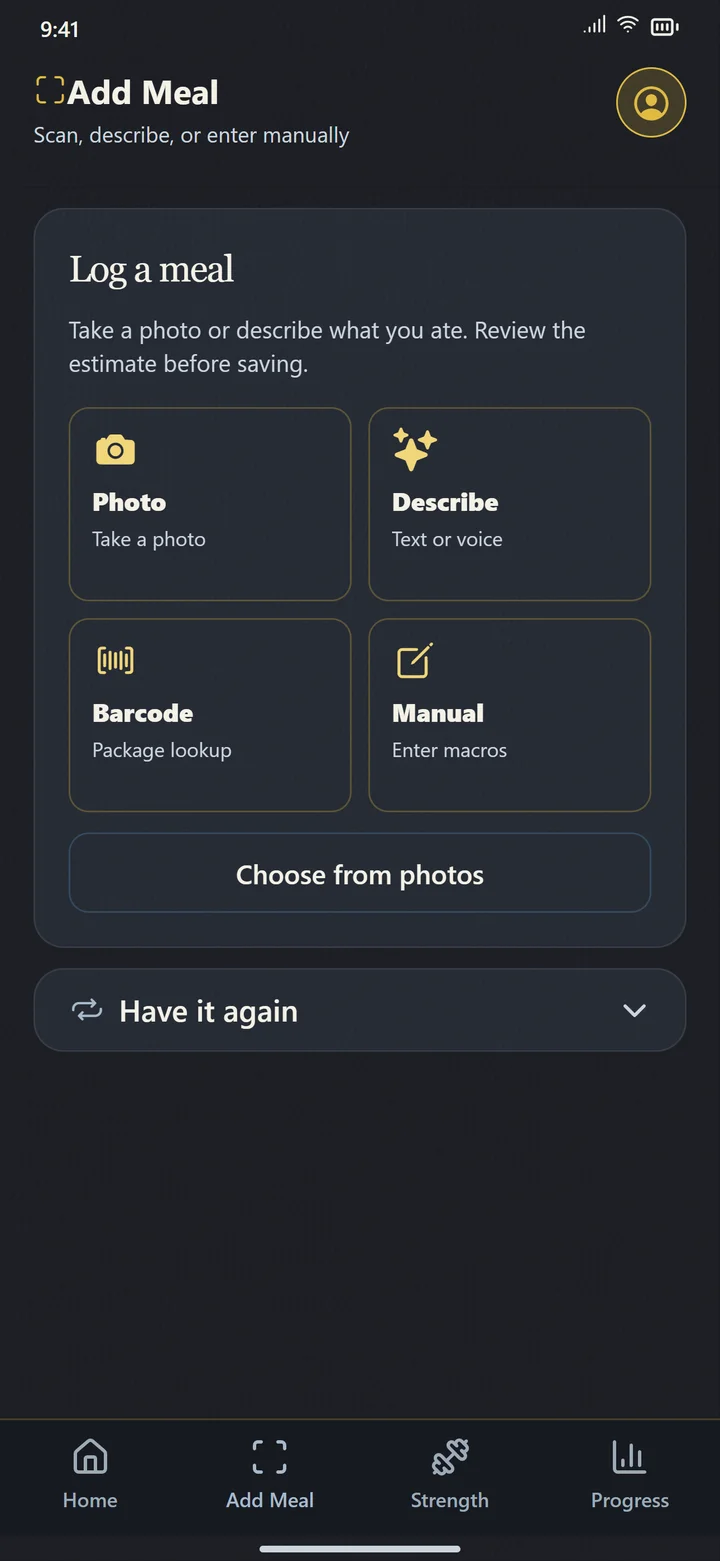
Start with the amount you actually ate. For a packaged yogurt or shake, scan the barcode and check the product, label basis and Amount eaten. If you drank half the container, record half rather than accepting a whole-package total. For a mixed meal, describe what was in it and review the draft.
Save familiar meals for reuse. On a later day, open Have it again and check the portion before saving. This keeps the entry shorter without assuming your appetite or intake is the same every day. Track the target agreed with your care team; this workflow does not set a medical target.
A weekly check you can discuss with your care team
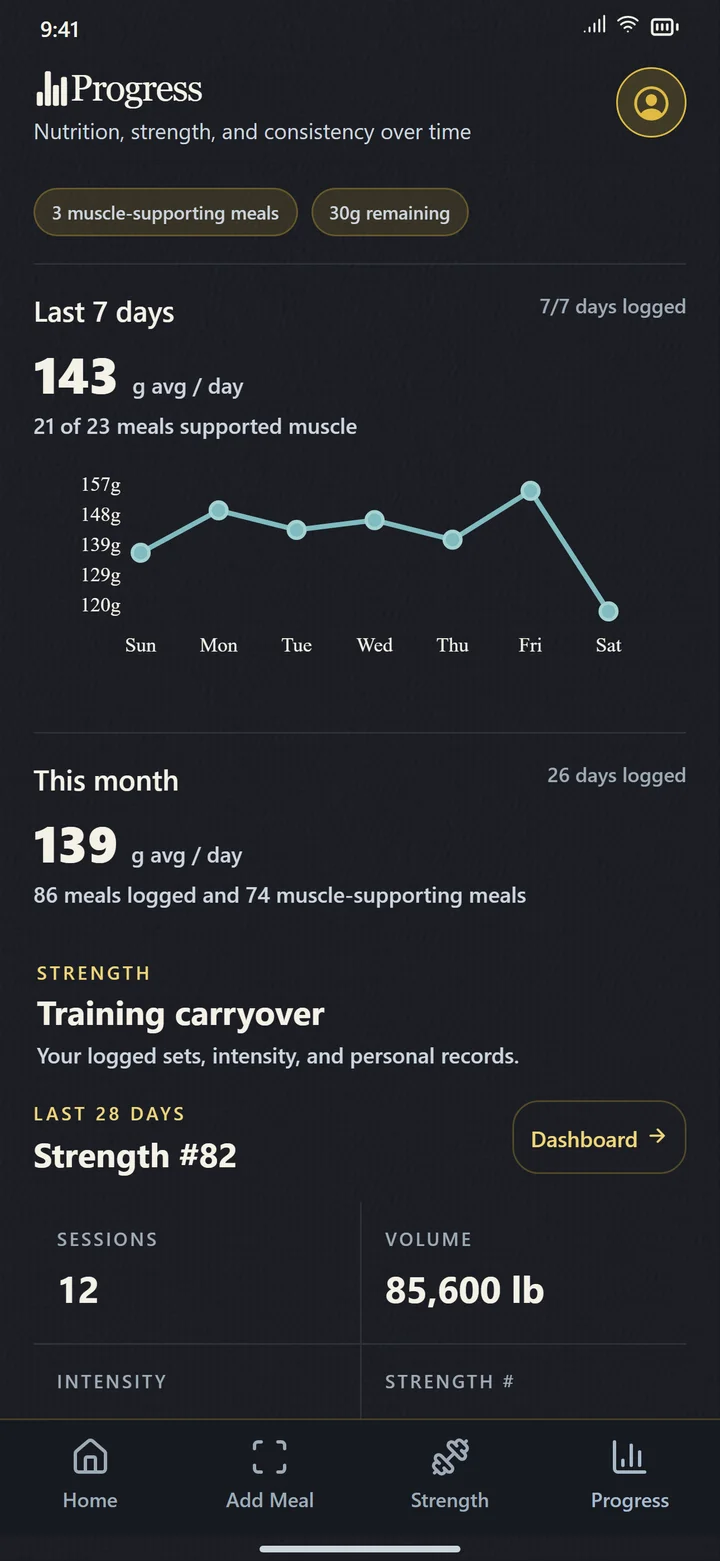
Review logged days alongside your protein history and completed strength sessions. A blank day may mean you did not log, not that you ate nothing. If you left a meal unfinished, correct the entry so the record reflects what happened.
Compare the same exercise in your training history and note changes that matter to you. Keep symptom details and medication questions in the record you use with your care team. GainzKeepr does not provide injection scheduling or a clinical symptom-management workflow.
Why a combined view is useful
GLP-1 medicines can reduce appetite, which may make ordinary eating routines harder to maintain. Current expert guidance emphasizes adequate nutrition alongside structured resistance training rather than treating protein or exercise as interchangeable fixes.
A tracker cannot determine whether you are preserving muscle mass, but it can help you notice whether protein intake, completed strength sessions, and exercise performance are staying reasonably consistent.
What to keep visible
The best tracking setup is the one you can discuss with your care team. Keep the record factual and avoid turning estimates into diagnoses.
- Meals and approximate daily protein intake
- Days when reduced appetite or other symptoms make eating difficult
- Completed resistance-training sessions
- Exercise-specific reps, load, and effort trends
- Body-weight trend when your care plan calls for it
- Questions or changes to discuss with your clinician or dietitian
Use trends, not alarm signals
One low-protein day or difficult workout does not establish a medical problem. Look for repeated patterns and share them with the professional managing your care when they affect intake, function, or your ability to follow the plan.
Strength history can add context that scale weight cannot provide. At the same time, gym performance changes for many reasons and is not a substitute for clinical assessment or body-composition measurement.
How GainzKeepr can help
GainzKeepr keeps a daily protein view, meal history, strength routines, live set logging, and progress trends in one place. Meal estimates remain review-first so you can correct a draft before it changes your totals.
GainzKeepr does not recommend medication changes, diagnose muscle loss, or prescribe a medical protein target. It is a habit-support tool you can use alongside qualified care.
When the app should stop being the answer
Contact your care team when medication side effects, difficulty eating or drinking, rapid changes, weakness, or other symptoms concern you. An app can organize observations, but it cannot evaluate the cause or tell you whether treatment should change.
Questions people ask
Can GainzKeepr tell me how much protein to eat on a GLP-1?
GainzKeepr can help you track a target, but individualized targets should come from a clinician or registered dietitian who knows your health history, medication plan, and current intake.
Is protein alone enough to protect muscle during weight loss?
Current expert guidance treats nutrition and structured resistance training as complementary. Protein intake alone does not provide the same training stimulus as resistance exercise.
Can a workout log prove that I am preserving lean mass?
No. A workout log shows training behavior and performance trends. It cannot measure body composition or diagnose muscle loss.
Evidence and further reading
- Nutritional priorities to support GLP-1 therapy for obesity: joint advisory American College of Lifestyle Medicine, American Society for Nutrition, Obesity Medicine Association, and The Obesity Society
- Strategies for minimizing muscle loss during incretin-mimetic treatment Obesity Reviews via PubMed Central